

How to prepare raised veggie beds for a bountiful growing season
-
Jill Fugaro
-
Why amend now?
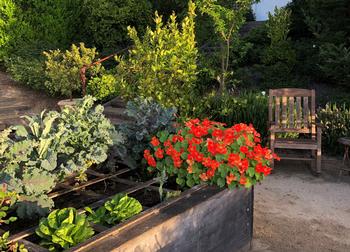 The results of amending the soil in January can be seen in the summer when the vegetables planted in March and April thrive in the summer months.
January is a great time for Marin County gardeners to prepare raised vegetable beds for the upcoming growing season. Amending the soil in winter months ensures that the beds will provide vegetables with the rich nutrients they need when planting time for summer crops arrives in late March to early April.
What to do first?
Before amending, it is important to assess the condition of the soil in the beds. Over the previous season, nutrients are depleted from the soil if you have been growing heavy feeders like tomatoes, pepper, or squash. In our Mediterranean climate, hot summers dry out the soil, causing it to lose structure. Compacted soil may need physical loosening and amendments to improve texture.
Testing your soil pH and nutrient levels will help you determine what amendments are needed. Simple soil kits are available in most garden centers. Generally, most crops grow best when the pH is slightly acidic to neutral, between 5.5 and 7.5. 7.0 is neutral.
Organic matter is the backbone of healthy soil.
The key to healthy vegetable beds is rich, organic matter. Incorporating high-quality compost and well-rotted (aged) manure into your raised beds improves the soil’s structure, moisture retention, and nutrient content. Organic matter feeds the soil’s beneficial microorganisms, which help break down nutrients and make them available to plants and attract earthworms.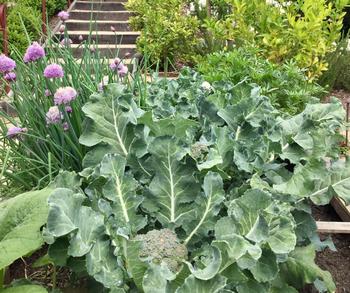 Broccoli and chives thrive in their amended soil.
If your soil test indicates the need for amendments to get the right pH and balance of nutrients, obtain those specific amendments.
If you make your own compost, great, use it!
If you don’t make compost at home, that’s OK. You can mix different brands of store-bought compost to make sure to get a balance of nutrients in your veggie beds.
Improving soil texture and drainage in winter
Adding sand, perlite, or vermiculite to heavy soils can improve aeration and drainage. Sandy soils, on the other hand, can benefit from the addition of organic matter to increase moisture retention. Ensuring that water can drain freely from the beds in the rainy season is crucial to preventing root rot and other moisture-related issues.
How to figure out how much amendment to use?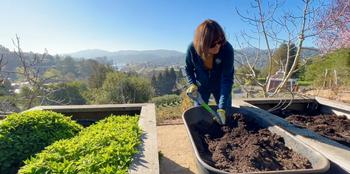 After moving irrigation tubing out of the way, the raised veggie bed is amended with a mix of peat moss or coconut coir, compost and vermiculite.
My recommended formula for the amendment mix is 1/3 peat moss or coconut coir, 1/3 compost/manure, and 1/3 vermiculite by mass (not by weight). I mix these three equal mounds of components in a wheelbarrow. If you don’t have a wheelbarrow, use a tarp on the ground where you can mix them thoroughly with a spade or shovel before lifting the tarp and, pouring the mix onto the beds and spreading evenly.
Figure on adding 2-3” of amendments to existing raised beds. Add 6-10” if the bed has been out of commission for a while.
Here is the calculation for covering one bed 9 feet long and 4 feet wide with a layer of material 3” deep.
9 feet x 4 feet= 36 square feet x .25 feet deep = nine cubic feet total. If you are mixing three different types of compost, that equals one cubic foot of each compost brand (3 cu. ft. total) added to 3 cubic feet of peat moss and three cubic feet of vermiculite or perlite. A typical wheelbarrow holds about 3 ½ cubic feet of amendments.
Preparing for Spring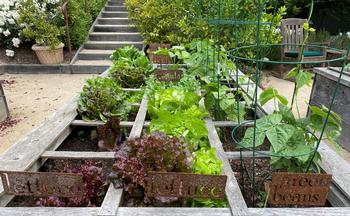 The results of amending the soil in January can be seen in the summer when the vegetables planted in March and April thrive in the summer months.
Amending your raised beds in January sets the stage for a productive growing season. Whether you’re adding organic matter and nutrients or improving the texture of your soil, the work you do now will pay off when your vegetables begin to flourish in the spring.
For more detailed soil preparation information, go to the Marin Master Gardener website: marinmg.ucanr.edu/EDIBLES/COVERCROPSETC/