

The science behind crop rotation
-
Marty Nelson
-
You grew tomatoes successfully in that sunny corner of your garden last year, so why shouldn’t you plant this year’s seedlings in the same spot? It’s tempting to follow the identical garden plan that worked well last growing season, but the advice from gardening experts is to rotate locations for annual edibles. There are research-based reasons for following their suggestions.
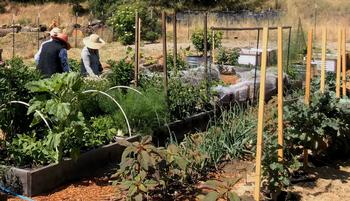 Rotating the location of annual vegetable crops among the available beds maintains soil health and discourages pests. Photo: Marty Nelson
Crop rotation is an ancient practice, dating back to pre-Roman times, to preserve soil fertility. The main strategy in crop rotation is to alternate crops with different characteristics. Plants differ in nutrient needs. Because vegetable crops from the same botanical family tend to use the same types and amounts of soil nutrients, repeated planting in the same location depletes the soil of elements essential for growth. Some plants, for example, are heavy users of nitrogen. Alternating these plants with plants that fix nitrogen in the soil can help to even out soil nitrogen levels.
Rotating annual crops can also reduce issues with diseases and pests. Plants in the same botanical family are susceptible to similar diseases and insects. Because many disease organisms can remain in the soil for several years, avoiding successive planting of the same crop in a garden area decreases the opportunity for soil-borne diseases to persist. Likewise, rotating crops deters insect pests from returning to their favorite host plants, thus disrupting their life cycle. Any debris or volunteers left behind by the previously grown crop can also harbor disease, so good cleanup before planting is important.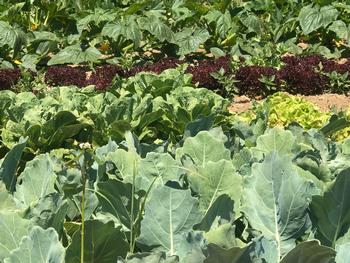 Leafy greens need nitrogen and do well following nitrogen-fixing legumes in a crop rotation plan. Photo: Marty Nelson
Major benefits of crop rotation include reducing the need for pesticides and fertilizer. Studies have also demonstrated an increase in crop yields with diversified rotational planting. Crop rotation can also enable the soil to retain more organic matter and store or “sequester” carbon when combined with low-till or no-till practices.
A crop rotation plan requires dividing crops into groups for planting and rotating together. There are different ways to do this. One way is to split crops into categories based on the part harvested. Leafy crops, for example, would be planted together and moved to a new location each season, followed by fruit crops, root crops, and legumes. Another method is to group crops as heavy or light feeders corresponding to their nutrient needs. Moving heavy feeders, such as tomatoes, corn, and squash, to beds previously occupied by light feeders like carrots, spinach, and beets can make better use of soil nutrients. Legumes (beans and peas) help retain nitrogen in the soil and fit into this rotation scheme as nutrient contributors.
Leafy greens need nitrogen and do well following nitrogen-fixing legumes in a crop rotation plan. Photo: Marty Nelson