

The sometimes hidden virtues of our animal neighbors
-
Diane Lynch
-
The raccoons in my garden are relentlessly curious about everything that goes on here. Open the green can and see what looks good in there… yum, some wasted food will be good tonight! Clamber over the fence, knocking some of the watering cans off onto the workbench below, breaking a cherished pot or two and maybe a stray gnome… What could possibly be good about raccoons? Well, they eat rats, mice, slugs, and your leftovers.
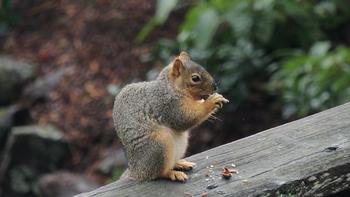 This squirrel is my dog’s nemesis, but one of their virtues in acorn disbursement, aka known as planting oaks. Photo: Diane Lynch
How about squirrels? Until about three years ago, I’d never seen a squirrel here, and now we have a mama who’s given birth. She is a relentless tease toward one of my dogs, who takes the bait and goes ballistic when she appears. The other day, she was up in the oak dispersing the acorns…so that’s what they’re good for. Plus, they’re fun to watch cavort through the trees…
What about those pesky scrub jays who gather on my roof nearly every morning, tapping away? It turns out they’re also great acorn dispersers. They can gather and plant into the thousands of acorns over an area of a couple of miles and then remember where about half of them are, which I consider a most impressive feat. Ever efficient, they can hold five acorns as they disperse them: three in their gular pouch and two in their beak! They plant a single acorn in each pot in my garden, where it puts down a nice taproot for the future tree. When I pull them out, they promptly plant another. Who said birds aren’t smart?
Both squirrels and jays are helping to plant more oaks by cacheing them and not retrieving all of them. Oaks are important trees in California and one might argue that they’re the best tree to have because they’re habitat for so many animals and the insects that feed them.
Deer can indeed be pests. They dine on our most precious plants but will also eat poison oak. When they’re hungry and thirsty in the summer, they’ll try almost anything except hellebores, which are toxic to them. But they also poop out some nice vegetarian manure to feed said plants, along with cultivating our beds a bit. They’re pretty easy to deter by spraying any of the many deterrents available at nurseries. Be aware that it’s illegal to trap or poison deer. An 8’ fence is probably your best deterrent.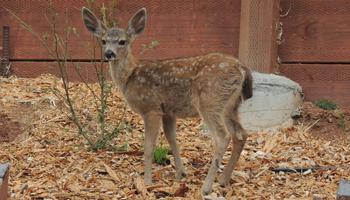 Deer are vegetarians, so they will dine on your foliage, but the young are very engaging. Photo: Diane Lynch
Skunks are pretty cute until you scare one, and it unleashes its powerful bad odor. After dusk, make some noise when going outside, and they’ll disappear. When they are raising a family in the spring, you may get really lucky to see the babies frolicking together like kittens. Skunks are really good for taking care of some of our real pests since they’ll eat mice, rats, and slugs.
Gophers, moles, and voles can be a gardener’s nightmare. Moles are small insect eaters who burrow underground. Voles, also called meadow mice, also burrow but will eat plant roots and other vegetation, including your vegetables. Cutting back vegetation can help with control. Gophers can be really damaging to lawns and other vegetation, along with sprinkler systems. Underground fencing can exclude them, but trapping is probably more effective. Poisons shouldn’t be used because most of them travel up the food chain. You also risk having children or pets get into it, so think hard about that one. What are they good for, you ask? Aerating the soil.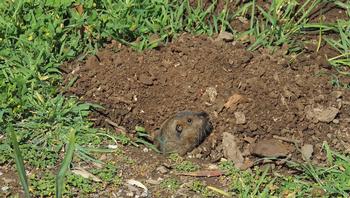 Gopher looking out from its burrow; note characteristic soil pattern to identify gopher activity. Photo: Diane Lynch
Foxes are all over Marin and are a delight to observe. Neighbors across the street had a litter born in a crawl space. They did the right thing and called WildCare (415-453-1000) for guidance. They were told to let them alone and that they’d disperse when ready. They did in due course, but for a few weeks, we had the pleasure of seeing the kits every so often. Like most carnivores, they eat rats, mice, and other small animals.
Opossums are multipurpose animals with diverse diets, including fruits, nuts, green plants, insects, snails, snakes, frogs, and small mammals such as meadow voles, mice, and rats. They’ll even clean up carrion on roadsides.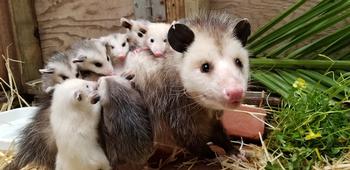 Opossums are one of nature’s best clean-up crews and great parents too! Photo: WildCare
Coyotes are present in most of Marin and rarely bother people, but they’re opportunists who could eat your cat or little dog if you leave them out alone after dusk. They also dine on rats, mice, and other small mammals, so they’re part of nature’s extensive clean-up crew.