

Embracing native edibles in your garden: hazelnuts, grapes, and huckleberries
-
Pamela Noensie
-
Native edibles such as Western beaked hazelnuts, California wild grapes, and Evergreen huckleberries make great garden additions. Not only are they easy to grow, but they also offer nutritional value and stunning aesthetics.
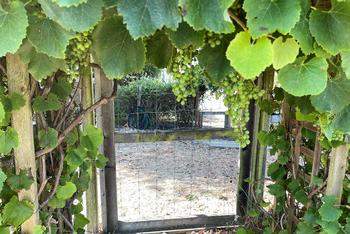 California wild grape vines supported by a wooden arbor at the entrance to a garden. Photo: Pamela Noensie
Long valued by indigenous communities, many native edibles lost their prominence with the introduction of European crops and other plants from around the world. Now, however, that may be changing. Some scientists and gardeners are waking up to the many reasons to grow our own incredible native edibles.
Resilience—less vulnerability to drought and disease
Having evolved over centuries within the local environments, most native edibles are less sensitive to swings in temperature and drought. California wild grapes (Vitis californica), for instance. Root rot can be a problem with imported grape varieties. But because our native grape is stronger and less susceptible to disease, it often serves as a robust rootstock for European grape (Vitis vinifera) varieties.Ease of cultivation
Like most native flora, these edibles thrive in our native soil, though most need good drainage. California wild grapes grow rapidly up any structure, so it’s best to give them a support. I’ve planted them in pots and trained them on an arbor at the entrance to my vegetable garden. They need little attention except for pruning to prevent them from overtaking your garden or a nearby tree and becoming a fire hazard. Deer like to browse the vines.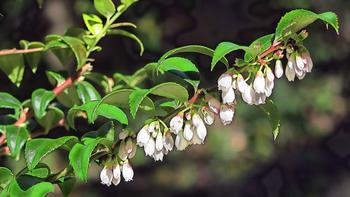 Western beaked hazelnut is named because its bud looks like a bird’s beak. Photo: Flickr
Western beaked hazelnut (Corylus cornuta var. californica) flourishes in partial shade and is adaptable to wet and dry locations. Although hazels are monoecious with female and male parts together on the same plant, they are not self-fertile; they require another cultivar nearby to produce nuts. However, once established, hazels are deer-resistant and will produce nuts for up to 50 years.
Northern California is fortunate to have a bounty of native edible berries. Evergreen huckleberry (Vaccinium ovatum), also called California huckleberry, is a personal favorite. It’s easier to grow than its relative, the blueberry, but like the blueberry, it prefers slightly acidic soil. Nevertheless, it grows fine in the alkaline soil of my garden. It’s a slow-growing, medium-sized shrub that tolerates nutrient-poor soil and shady conditions. It’s also deer-resistant.
Wildlife benefits
Huckleberries, hazelnuts, and wild grapes are vital for wildlife in terms of sustenance and shelter; they also offer nutritious food for humans—that is if you can beat the animals to them.
Western beaked hazelnut is named because its bud looks like a bird’s beak. Photo: FlickrThe bell-shaped flowers of huckleberries attract hummingbirds, bees, butterflies, and moths. Hazels also attract numerous insects in the spring. In the fall, the nuts, which are rich in protein and fat, are a good food source for larger mammals. Birds, especially, have a penchant for our native grapes.
In addition, all the native plants mentioned here provide shelter for wildlife. I’ve noticed birds’ nests in the thick foliage of the grape vines covering my arbor and quail living under the native berry bushes.
Aesthetic appeal
Native grapevines boast vibrant apple-green leaves in the spring, transforming to yellow before shedding in autumn to reveal bunches of small, purple grapes elegantly hanging from the vines. Even in winter, their intertwining branches exude rustic elegance.Evergreen huckleberry shrubs remain attractive year-round due to their evergreen foliage and reddish bark. In the fall, their delicate pink flowers transform into vibrant purple berries.
Hazels are particularly intriguing, bearing long yellow catkins (male) and red flower buds (female) on the same bush. The red buds, if pollinated, develop into hazelnuts come fall.
Acknowledging their value in the era of climate change
As global warming persists, the significance of native edibles becomes increasingly evident. Their resilience against drought, disease, and pests surpasses that of most imported edible plants. Moreover, they nourish humans and wildlife and create preferable habitats for a diverse range of creatures.Ask for native edibles at local native plant nurseries. For more information: https://marinmg.ucanr.edu/PLANTS/CAL_NATIVE_PLANTS/