

The oriental fruit fly: what Marin County gardeners need to know
-
James Campbell
-
Hello there, dear gardeners of Marin County! Today, we’re going to chat about a pesky little critter that’s been causing quite a stir in our neck of the woods – the Oriental fruit fly. Grab a cup of coffee, settle into your favorite garden chair, and let’s dive into this juicy topic.
Now, you might be wondering, “What in tarnation is an Oriental fruit fly?” Well, let me tell you. This tiny terror, scientifically known as Bactrocera dorsalis, hails from Southeast Asia. The Oriental fruit fly isn’t just any old fly. Oh no, it’s a serious pest that loves our fruits and vegetables just as much as we do. This little rascal can cause some big problems if left unchecked.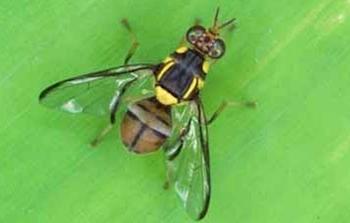 The Oriental Fruit Fly has distinctive yellow bands and a T-shape on its back end. Photo: San Diego County
Spotting an Oriental fruit fly can be a bit tricky, but I’ve got some tips for you. These flies are a little bigger than a housefly. They’ve got a dark thorax, that's the middle section with yellow sections. They have clear wings with a brown band along the leading edges. The tan abdomen has two black bands near the thorax and a T- shape pointing to the back end. You might need to squint a bit, but once you’ve got it, you’ll be able to recognize these pests. Keep a sharp lookout because knowing what to look for is the first step in defending your garden.
So, what’s on the menu for the Oriental fruit fly? It loves a wide range of fruits and veggies. Here are a few of its favorite snacks: citrus fruits, stone fruits, apples and pears, figs and guavas, and tomatoes and bell peppers. And that’s just the tip of the iceberg. If you’ve got a garden full of delicious produce, there’s a good chance the Oriental fruit fly will want to stop by for a bite.
Now, I hear you asking, “Why is this fly such a big deal?” Great question! The Oriental fruit fly is a major threat because it lays its eggs in our beloved fruits and veggies. When those eggs hatch, the larvae start munching away, causing the fruit to rot from the inside out. This not only ruins our harvests but can also lead to serious economic losses for local farmers. The Oriental fruit fly has already been found in parts of Southern California. Its presence has prompted state agricultural officials to take significant measures to control and prevent its spread. In September 2023, the California Department of Food and Agriculture established a quarantine for the Oriental fruit fly in portions of Santa Clara and Contra Costa counties.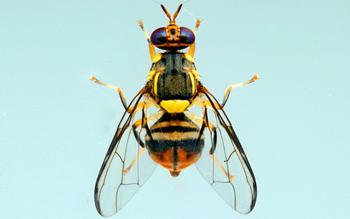 The Oriental Fruit Fly, Bactrocera dorsali, poses a threat of severe economic loss. Photo: Viwat Wornoayporn/IAEA
So, what should you look out for in your own garden? Here are some telltale signs: if you notice small puncture marks on your fruits, especially if the fruit starts to rot prematurely, it could be a sign of Oriental fruit fly activity. If you cut open a piece of fruit and find tiny, white, worm-like larvae inside, you’ve got a problem. These larvae are the offspring of the Oriental fruit fly. Keep an eye out for the adult flies themselves. You might spot them buzzing around your garden, especially near ripening fruits.
Don’t worry, folks. If you find evidence of these pests, there are steps you can take to protect your garden. Here are some tips from our friends at the University of California: set up traps to catch adult flies. You can buy these from your local garden center or make your own using a mixture of cider vinegar and a small amount of soap. Keep your garden clean. Remove any fallen fruit and dispose of it properly. This helps eliminate breeding sites for the flies. Use fine mesh nets to cover your fruit trees and plants. This can prevent the flies from laying their eggs. In severe cases, you might need to use pesticides. Always follow the instructions and consider consulting a professional.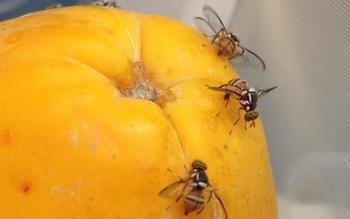 Adult Oriental Fruit Flies inserting ovidepositer into fruit. Photo: Stephanie Gayle, USDA-ARS
So there you have it, friends – the lowdown on the Oriental fruit fly. It’s a pesky little bugger, but with vigilance, we can protect our beautiful Marin County gardens from this fruity menace.