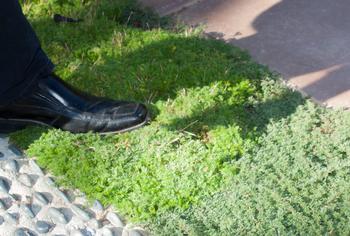
The combination of Elfin thyme and chamomile makes an attractive, low-water lawn alternative that tolerates light foot traffic. Photo: CountryMouse13
For those of us who adore gardening, putzing around with rakes and wheelbarrows and hand trowels is a pleasant way to spend an afternoon – even better if you work up a good sweat. But for those less enamored with these kinds of chores, one nagging question persists: “How can I have a nice-looking landscape without going broke or driving myself crazy?”
Fortunately, there are tried-and-true strategies for lowering your stress level in the garden.
If this sounds like something you’d like to achieve, I suggest you approach it as if you were staging a theatrical production – with you as the director and producer.
Here’s how to put on a garden show that maintains your sanity and receives a standing ovation from your neighbors.
Start by gathering your backstage crew.
Lights, scenery, props, and costumes are critical theatrical components. In the garden, this is infrastructure -- your garden’s layout, irrigation system, and soil.
I realize this sounds about as exciting as a snail race, but I assure you that without investing time and energy in these foundational aspects of your garden, it’s going to eventually cost you more time, energy, and money.
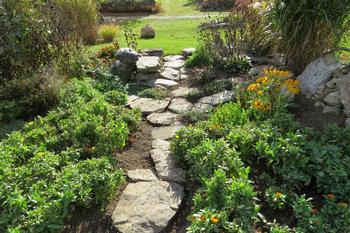
Walking on bare garden soil causes problems. To avoid this, designate clear walking paths. Photo: Pickpic
Believe it or not, walking in your garden beds can affect the quality of your soil. Why? Because soil (especially damp soil) that’s repeatedly tromped upon becomes compacted, which means the tiny pockets of underground air get smooshed. When this happens, the plants trying to survive in this soil suffer.
To avoid this, create designated pathways. Gravel, mulch, and stepping stones are good materials for paths because they’re inexpensive and let water percolate through. Avoid using bare earth as pathways because they inevitably turn into weedy messes. You’re trying to reduce maintenance, remember?
Once your paths are organized, the next step is caring for your soil. Why? Because healthy soil grows healthy plants and, lousy soil grows iffy plants prone to pests and diseases. Ignoring your soil is a recipe for problems. Bottom line? Skip the plant fertilizer (please!) and feed your soil instead.
How do you do this? The easiest way to maintain soil health (and suppress weeds) is to keep a 2-inch layer of mulch on it. Simply scan your garden every year or so to see if there are areas that need topping off—bonus points for spreading a little compost under the mulch.
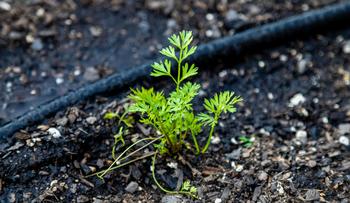
Drip irrigation systems save time and money and allow you to go on vacation without worrying that your plants will dry up. Photo: Eric Brehm, unsplash
The next backstage crew member? Irrigation. Perhaps nothing in your arsenal of stress-reducing tricks is as effective as a good drip system on a timer. If you want lower water bills, healthier plants, and the ability to go on vacation without worrying about coming home to shriveled-up tomato plants, get a drip system. You will never regret it.
What about the actors? The stars of the show? Who’s going to bring your theater to life?
Here’s my advice: avoid the divas. You know the type. The plants that require constant attention. They wilt like noodles. Attract pests like magnets. Gulp water like camels. Spread like rabbits.
Get rid of them!
The first prima donna to nix? Your unused lawn. That green water-hogging monster that consumes gobs of your time. Who wants a plant you have to mow, edge, aerate, water, seed, weed, and feed? Forget it. Stick with plants that may only need attention once or twice a year instead: low-growing evergreen groundcovers, billowy ornamental grasses, and hard-working perennials.
While you’re at it, choose California native plants, which are naturally adapted to our growing conditions and provide ecological benefits that non-native plants cannot.
All these time and energy savers, plus numerous helpful plant lists, are explained in greater detail on the Marin Master Gardener website. Visit
https://marinmg.ucanr.edu/.
Once your stage is set – pathways delineated, soil mulched, irrigation in place, lawn gone – you can revel in your beautiful, low-maintenance production. It’s curtain time. Sit back, enjoy the show, and take a well-deserved bow. Who knows? You may even be asked for an encore.